Fostering Relationships with the Land Spirits
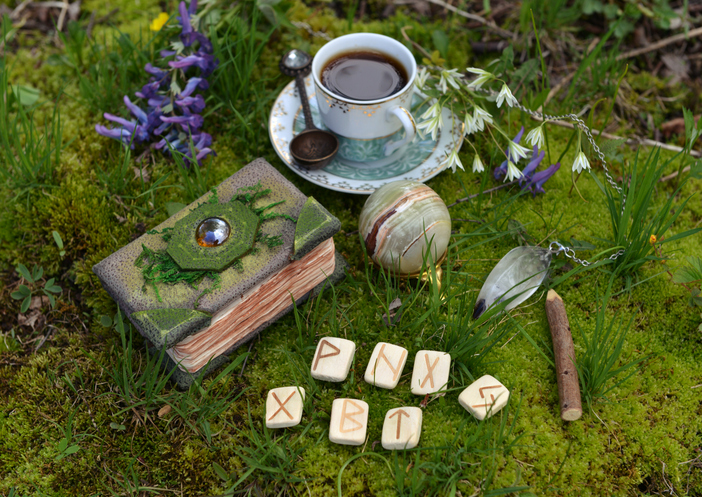
Heathenry is a religion that is animist as well as polytheist, and the animist portion of the religion is often forgotten. Records of the Heathen past point to land spirits following people around in the form of animals. And the Icelanders would remove the iconic dragon heads on their longboats as they approached land so as to not direct that fearsome intention toward those spirits with whom they sought reciprocity. Clearly, our spiritual ancestors held the land spirits in high regard.
The land spirits might also be representatives of the Gods. The Muslim traveler, Ibn Fadlan, noted in his interactions with the Rus, that they would make offerings to the Gods. Then, at night, when animals would eat the offerings left for the Gods, Ibn Fadlan noted that the Rus would see this as the Gods accepting their offering. This observation inspires my perspective that the primary way of fostering your relationship with the land spirits is to foster your relationship with the environment and the plants and animals around you. Through them we strengthen our relationship with the land spirits.
Something that gets a certain amount of resistance in Heathenry is the concept of localization, often because this can mean practices will look different than they might have looked historically. Localization happens when a tradition changes on the basis of its locality. This can happen through a number of factors, but sometimes it is simply the nature of the place that can change a practice. Given the nature of our relationship with the land spirits and its connection to the land, it follows that any practice with them would be particularly affected by localization, especially considering the variety of life and environments in the world.
The Heathenry of the Viking Age and before certainly had a significant localization effect as the traditions moved throughout time and place, carried by the people who continued these practices. The subtle changes to local flora and fauna would change practices. If one's family had settled at the coast, they might make offerings to the spirits of the sea. If they had settled in the forests or mountains, they might have left offerings for the spirits of the deer, squirrels, wolf, or fox.
So if the resistance to localization is due to a practitioner having a greater focus on history, one should keep in mind that localization was, too, part of Heathenry's history. The practices in Norway would have looked subtly different from those in Iceland or Greenland, and there might have been some exploration of practice during the short forays into Vinland. Practices today adapting to different localities due to climate, social changes, and a greater understanding of nature is simply an extension of that historical process.
In this time period, most people's lives were related to agriculture in some way. As a result, different localities and climate would have greatly affected their relationship with the land. They may have planted their crops at subtly different times, what herbs they collected would have changed, what they hunted would have changed, and so their relationship with the land spirits would have been different. As time has marched on, we are today not as connected to agriculture as we once were, especially since the onset of the industrial revolution. This has, on balance, brought many improvements to our lives, but has fundamentally changed how we relate to the land, plants, and animals around us.
Today there are Heathens all around the world, and that live in radically different environments than those that we would have seen during the Viking Age. Many of us live in climate zones that would have felt entirely foreign to an Icelandic family making their living off a fishing boat and a flock of sheep. The cities and towns we live in are wildly different. Even rural living has a fundamentally different relationship with nature than it did a thousand years ago. If a Suebian warrior from the time of Tacitus and Julius Caesar were transported to today, he probably would not know what to make of our skyscrapers and indoor plumbing. Further, he would be confused at just how separated from nature our lives have become.
We do not celebrate our harvests or the changing of seasons in the same way, as our lives are no longer as closely tied to the agricultural cycles. Hunts are no longer a regular part of life for most people. We can obtain an almost-ripe avacado in the supermarket on demand, and then let it sit in our kitchen just long enough to miss that perfect window of avocado deliciousness before we try again.
For Heathens today, the practice of fostering a relationship with the land spirits will depend greatly on their environment and what control they have over their environment. For those that live in an area where they can have a dedicated garden, this would be a wonderful way of building that relationship with the land spirits. Not only can you grow some of your own food to reconnect just a little with that element of our past, but you can also grow plants that will bring interested local fauna.
Find out what flowers the local bees prefer, and provide them with a space to come visit. You might place a little altar to the Goddess Beyla, whose name suggests a relationship to bees, among the flowers. If you do build an outdoor altar or offering space, consider its environmental impact, and that animals will interact with the space. Think about things such as whether or not any altar items are made of plastic, which should not be used for this purpose.
If there are local deer who pass by, find out what local plants they enjoy. As those plants mature, you might find them coming to visit more often. You may also find your garden competing with their appetite, but over time, you will find the right balance. Maybe where you live has a nice place for a bat house or a bird house. A little offering to squirrels that frequent your environment is also a great idea. They like peanuts, but should be given them only as an infrequent treat. More regular offerings to squirrels might be walnuts or pecans.
For more limited spaces like apartments, sometimes a window garden or a bird feeder becomes a great mechanism for fostering that relationship with the land spirits. If you keep a practice at an altar, give an offering of bird seed into a bowl and then scatter it somewhere safe for birds to find them after a few days.
Even something as simple as taking a trash bag to the park or on a hike to pick up whatever trash you may find on your way can be a great devotional act to the land spirits. The act of getting out of our routines, even for a moment, to share some time with nature, can bring us spiritually closer to nature and put us in the mindset of considering our options for devotional offerings to the land spirits.
Everyone's life is different, and we will have different abilities, different environments, and different land to consider. Whatever it is that you decide upon, be sure to research the local wildlife, and especially the animals who will receive your offering, or be otherwise affected by your devotional action. Find out what offerings will be safe and healthy for them and be sure to use reputable sources. You do not want to negatively impact your environment or bring harm to those you wish to respect.
Political acts work as devotional offerings, such as pushing your local government for better environmental policy, or to deny permission for building of one of these AI data centers. There is also volunteer work for the humane society, fostering a pet, or anything that puts you face to face with animals. A world that is better for the plants and animals with whom we share our lives will be better for the land spirits and for ourselves. Even if each of us do only a little, a lot can be done.
May the Gods be with you,
So let it be.

About Ocean Keltoi
Related Products

is subject to certain Terms and Conditions