

 New Worlds of Body, Mind & Spirit Since 1901
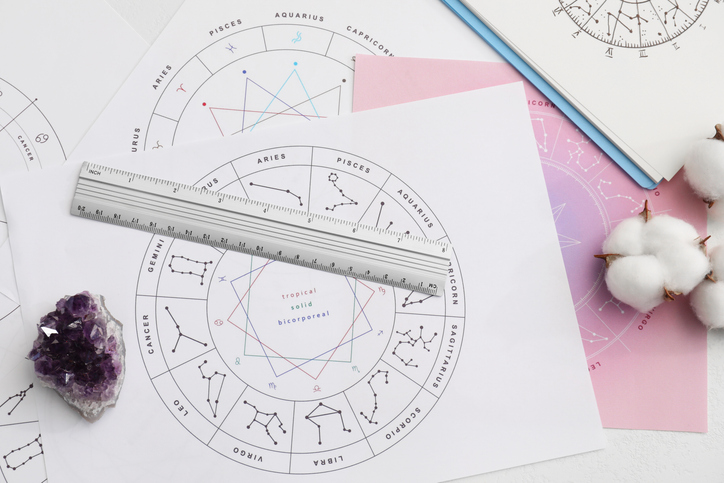 Hello Astrology Soulmates! It's so good to sit with you for a moment. I always love these opportunities where we can slow down together and explore the language of astrology in a deeper way. If you've studied astrology for a while, you may have noticed that there comes a point where simply knowing keywords doesn't quite feel like enough anymore. You begin to sense there is a richer conversation happening in the chart, but you're just outside of it. Learning astrology is a lot like learning a new language in that knowing a few words can help you recognize what's happening, but it rarely allows you to truly enter the conversation. I learned this very personally while studying Korean. When I only knew a few words or phrases, I could recognize pieces of what was happening around me, but I could not truly participate. I could not follow the deeper meaning of the conversation, respond with confidence, or feel fully connected to the people in front of me. I had enough language to notice something was happening, but not enough fluency to enter into it. Astrology can feel the same way. Many students begin (rightly so) by learning a few keywords. The Sun means identity. The Moon means emotions. Venus means love. Mars means action. These are important starting points, but if we stay there, we remain at the edge of the language. We may recognize symbols, but we are not yet fully in conversation with the chart. That is why the real goal of studying astrology is not memorization. It is not collecting definitions or repeating phrases we have heard before. The real goal is what I call Astrofluency™—the ability to speak, read, and write the language of astrology with clarity, confidence, and depth. When you become more fluent, you stop asking only, "What does this placement mean?" and begin asking deeper questions. You begin describing what is happening. You begin interpreting. You begin participating in the living dialogue of the chart. You start listening not just for symbolism, but for relationship, tension, growth, harmony, and meaning. That dialogue lives most vividly in planetary aspects. If planets are the characters in your birth chart, aspects are the conversations they are having. They show where different parts of your self cooperate, where they challenge one another, where they must adjust, and where they naturally flow together. Without aspects, astrology can feel static, like a list of symbols. With aspects, it becomes dynamic, relational, and alive. This is also where my own teaching lives. In the blend of Evolutionary and Humanistic astrology that I practice, we are always asking: What is happening to my spirit, and what will my human do with it? Planetary aspects help us answer that question. They show us how the deeper movement of growth is unfolding within us, while also showing how that movement asks to be lived, chosen, and expressed in daily life. In this article, I want to help bring you more deeply into that conversation. My goal is to increase your Astrofluency™ by giving you a step-by-step guide to reading and speaking your aspects, so that you can move beyond isolated keywords and into a richer relationship with the language of astrology. Let's begin. Step 1: Identify the Planets Involved: Who Is Speaking? Every planet reflects a distinct function, need, or impulse within the chart. The Sun speaks to identity, vitality, and purpose. The Moon reflects emotional needs, instinctive responses, and the ways we seek safety and belonging. Mercury shows how we think, learn, and communicate. Venus reveals our values, relational style, and the ways we connect. Mars describes desire, drive, and how we pursue what we want. As we move outward, Jupiter reflects expansion, belief, opportunity, and meaning. Saturn speaks to responsibility, maturity, limits, and long-term development. Uranus, Neptune, and Pluto often describe larger forces of awakening, surrender, and transformation that shape both personal and collective experience. When you see an aspect, start by asking: Which parts of the self are in conversation here? Is this a conversation between emotional needs and personal discipline? Between love and fear? Between desire and restraint? Between identity and change? For example, Venus square Saturn is not simply "difficulty in love." It is a conversation between connection, worth, and affection on one side, and responsibility, caution, and maturation on the other. This may show up as guardedness in relationships, a strong need for commitment, fear of vulnerability, or a deep desire to build something lasting and real. The exact expression will vary, but the planets tell us what the core conversation is about. This is where Astrofluency™ begins. Instead of immediately deciding whether an aspect is "good" or "bad," you start by listening to who is speaking. Step 2: Understand the Aspect Type: What is the Tone of the Conversation? The aspect itself describes the quality of interaction between those planetary forces. It tells you whether the conversation is smooth, tense, concentrated, balanced, or in need of adjustment. A conjunction, which occurs when planets are close together, blends their energies. This is a concentrated and often powerful aspect because the planets are speaking through one another. Their meanings become fused. A Sun–Mars conjunction, for example, can produce boldness, vitality, and strong will. A Moon–Saturn conjunction may show emotional seriousness, restraint, or early experiences that require maturity. Conjunctions intensify whatever they touch. A sextile creates opportunity. It reflects supportive energy that is available, but not always automatic. A sextile often feels like an open door: there is potential, but it must be engaged. Venus in sextile to Jupiter may offer ease in connection, warmth, generosity, or creative abundance. Mercury in sextile to Uranus may support inventive thinking, insight, and original expression. Sextiles are cooperative, but they ask for participation. A square creates friction. This is the aspect of tension that pushes growth. Squares often feel uncomfortable, particularly when we are young or when the energies involved seem to pull against one another. Yet they are some of the most productive aspects in the chart because they generate movement. Mars square Saturn, for example, may initially feel like frustration between desire and limitation, but over time, it can develop endurance, discipline, and resilience. Squares challenge us to become stronger. A trine represents ease and harmony. The planets involved tend to understand one another naturally, allowing their energies to flow together with less resistance. Moon trine Neptune may support imagination, empathy, and intuitive sensitivity. Mercury trine Jupiter may support teaching, storytelling, or broad understanding. Trines often show gifts, but because they feel so natural, they still need conscious use in order to fully develop. An opposition creates polarity. Here, two planetary forces stand across from one another, often asking for awareness, balance, and integration. We may first experience one side more strongly and encounter the other through relationships or circumstances. Sun opposite Moon, for example, can reflect tension between identity and emotional needs. Venus opposite Pluto may intensify relational experiences around attachment, vulnerability, and power. Oppositions ask us not to choose one side, but to learn how both belong in the conversation. A quincunx feels like an itchy tag on the back of your shirt and represents the need for adjustment. This aspect is often subtler than the others, but it is deeply important. Planets in quincunx do not share the same element, modality, or polarity, which means they often do not understand one another easily. The result can be a persistent feeling that something is slightly off or difficult to coordinate. Mars quincunx Neptune, for example, may create a disconnect between direct action and inspired vision. One part of the self wants clarity and motion, while another moves through intuition, sensitivity, or uncertainty. The quincunx teaches ongoing recalibration. It asks us to refine and adjust rather than force. When you understand the aspect type, you begin to understand the tone of the conversation. Step 3: Consider the Signs: How Do These Parts Express Themselves? In a simple sense, planets tell us who is speaking, aspects tell us how the conversation is happening, and signs tell us how those voices sound. The sign gives tone, temperament, mood, and method. A Mars square Saturn in Fire signs will feel very different from a Mars square Saturn in Earth signs. In Fire, the tension may be more outward, passionate, fast, or reactive. In Earth, the same tension may show up through work, physical effort, pressure, or the slow burden of carrying too much responsibility. Water signs may emotionalize the experience, while Air signs may intellectualize or verbalize it. The signs add texture to the interpretation. They help us hear whether the conversation is direct or hesitant, dramatic or contained, adaptable or fixed. Without a sign context, aspect interpretation can become too generic. With a sign context, it becomes more human and more precise. Step 4: Look at the Houses: Where Does This Conversation Play Out? Houses anchor the interpretation. They show the life arenas in which the conversation between planets becomes visible. Without houses, we understand the internal dynamic. With houses, we can see how that dynamic moves through relationships, work, home life, creativity, money, spirituality, or any other area of life. For example, a Venus–Saturn square across the 1st and 7th houses may strongly influence partnership, identity, and how one shows up in close relationships. The same square across the 2nd and 8th houses may speak more to self-worth, shared resources, trust, intimacy, and financial entanglement. Across the 5th and 10th houses, that same aspect might create tension between creativity, visibility, joy, and professional duty. This step helps astrology become practical. It moves the interpretation from inner symbolism into lived reality. Step 5: Synthesize and Speak the Language of the Aspect This is the moment where astrology stops being a set of isolated meanings and starts becoming language. You are no longer memorizing definitions. You are building interpretation. One simple way to begin practicing Astrofluency™ is by forming a clear sentence from the chart. Try using this structure: You can think of this sentence as the grammar of astrology—the structure that helps the chart begin to speak. For example: Speaking the aspect this way helps you move beyond memorized meanings and into real interpretation. Instead of seeing astrology as separate pieces of information, you begin hearing how the parts of yourself are interacting. If you are studying your own chart right now, pause for a moment and try this aloud with one of your aspects. Say the sentence slowly and notice what emerges as you describe the relationship between those planets. Very often, the meaning begins to unfold naturally once you allow yourself to speak it. This is the practice of Astrofluency™ and learning not only to recognize the symbols in the chart, but to speak the language they form together. A Practical Example: Moon Quincunx Mars Imagine a chart with the Moon in Cancer in the 4th house and Mars in Sagittarius in the 9th house, connected by a quincunx. The Moon in Cancer seeks emotional safety, closeness, familiarity, and rootedness. It wants home, care, and secure emotional ground. Mars in Sagittarius, on the other hand, seeks movement, exploration, truth, adventure, and the freedom to pursue what lies beyond the familiar. These two parts of the self do not naturally move in the same rhythm, so they require adjustment. The person may feel deeply nourished by home and emotional connection, yet also become restless when life grows too small or contained. They may long to expand through travel, learning, or new experiences, yet feel guilt or vulnerability when moving too far away from what feels emotionally safe. At times, bold action may be followed by retreat. At other times, emotional needs may interrupt movement toward growth. The quincunx does not ask the person to choose one side and reject the other. It asks for adjustment. It asks: How can I honor my need for emotional grounding while still allowing my spirit to grow? How can I let one part of myself stretch without making another part feel abandoned? This is where your deeper astrological practice comes in. In the language I teach, we might ask: What is happening to my spirit, and what will my human do with it? The spirit may be asking for expansion, truth, and new experience. The human may need reassurance, safety, and emotional steadiness in order to participate in that growth. The aspect becomes meaningful when both are included. From Interpretation to Astrofluency™ They show us that the chart is not a collection of separate symbols, but a living conversation between different parts of the self. Conjunctions intensify. Sextiles invite participation. Squares strengthen through friction. Trines support through ease. Oppositions balance. Quincunxes refine through adjustment. When you learn to read aspects step-by-step, you begin to move past surface-level interpretation and into real relational understanding. You begin to hear why certain patterns repeat, why some parts of life feel naturally supported, and why others call for conscious effort and growth. You stop standing outside the language, recognizing only fragments, and begin stepping into the deeper conversation. That is the heart of Astrofluency™. It is not simply knowing what a square or trine means. It is learning how to listen to the chart closely enough to understand how its parts are interacting, what your spirit may be growing through, and what your human life is being asked to do with that growth. For readers who want to deepen this process, The Big Book of Planetary Aspects was written to support exactly that kind of learning. Its purpose is to help students move beyond memorization and into meaningful interpretation, so that the language of astrology becomes something they can truly read, speak, and live. The conversation in your chart has always been there. Astrofluency™ helps you enter it more fully, and once you do, astrology becomes not just something you study, but something you can deeply understand and speak with confidence. Ok Beautiful Astrology Soulmates, may your charts continue to speak to you, and may your Astrofluency™ grow with every conversation you have with them. |

Dr. Stormie Grace is a practicing astrologer and creator of the Stormie Grace Astrology YouTube channel, where she interviews astrologers and shares a wealth of knowledge. She speaks at conferences internationally and has ...