

 New Worlds of Body, Mind & Spirit Since 1901
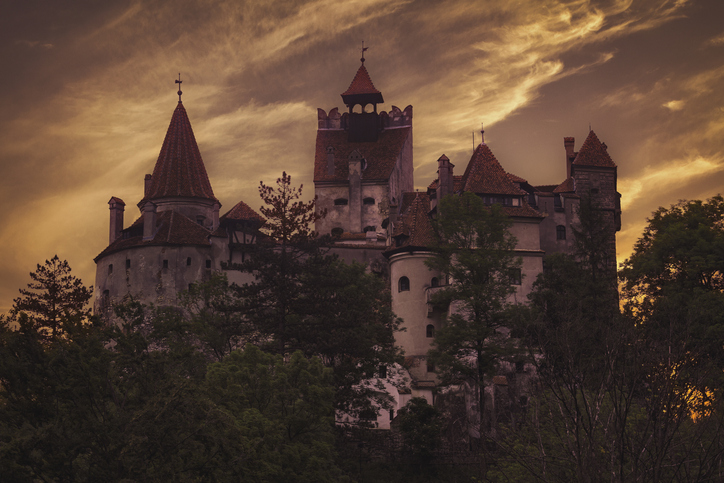 Anyone who has treated themselves to the pleasure of reading Bram Stoker's 1897 masterpiece Dracula will notice something rather curious. For most of the novel, although his menacing presence is felt, the Count himself is nowhere to be seen. The book, the greatest gothic horror novel of all time, is supposed to chronicle the dark deeds of the vampire. However, after the first section in Transylvania, the Count only makes a few "guest appearances." Dracula dominates the early chapters, when Jonathan Harker visits him to conduct a real estate transaction. In this sequence, his evil and menace is overwhelming from the first description: "Within, stood a tall old man, clean shaven save for a long white moustache, and clad in black from head to foot, without a single speck of colour about him anywhere. He held in his hand an antique silver lamp, in which the flame burned without chimney or globe of any kind, throwing long quivering shadows…" The Count is given center stage for the next few chapters, providing an image of a devil trying to embrace the façade of a normal human being. He even speaks of the great military campaigns of his ancestor (Jonathan does not realize that Dracula is actually talking about himself—an old veteran telling war stories). Bit by bit the mask slips. The Count's diabolic persona is soon overshadowed by his three succubus women who attack Jonathan: "In the moonlight opposite me were three young women, ladies by their dress and manner. I thought at the time that I must be dreaming when I saw them, for, though the moonlight was behind them, they threw no shadow on the floor. They came close to me, and looked at me for some time, and then whispered together." Eventually, Dracula leaves for England, abandoning Jonathan to the mercies of these Lamias. However, he manages to escape before the demonesses could rise at night to feed off of him. Then something very curious happens. Dracula, the main character, the one whose name is the very title of the book, pretty much disappears. He is seen again, but in what may be described as brief "cameo appearances." He is seen as a vicious canine after the wreck of the ship Demeter. He engages in an inane conversation with a zookeeper, and later he is spotted in daylight, standing on a street wearing a straw hat. We see him when he attacks Mina and tempts (and later murders) Renfield. Beyond that the action completely shifts away from him. Although his malevolent presence is the driving force of the novel, he remains unseen, a shadowy phantom lurking in the shadows. Is this any way to treat the main character of a novel? Yes. You see, despite his name being on the cover of the book, Dracula is not really the main character. To see who is the real star of the show, we must take a look at how Bram Stoker wrote the novel. Stoker was the acting manager of the celebrated actor Sir Henry Irving, who owned the Lyceum Theater. It was Stoker's job to handle all of the endless details dealing with the thespian and the theater. One of the features of the Lyceum was known as the "Beefsteak Room." Here prominent visitors were treated to an after-performance meal and an evening of brandy, cigars, and fascinating conversation. Among the dignitaries were a number of mystics, including members of the Order of the Golden Dawn. One of these was the clairvoyant artist Pamela Colman Smith. At the time she was engaged in painting the mystic images for what is now known as the Rider-Waite-Smith Tarot. Her conversations with Stoker obviously had a major role in shaping the novel, as tarot images are quite apparent throughout. The cover jacket of the first American edition of the novel showed Dracula climbing headfirst like a lizard out of an upper window of the castle. This image almost completely mirrors the depiction on the tarot card The Tower. Dracula is no mere ghost story, but rather a complex and brilliant account of a spiritual journey. The one taking the odyssey of self-discovery is the real star of the show: Jonathan Harker. The Major Arcana of the tarot is sometimes described as the "Fool's journey." Like the Arthurian Perceval, the Fool begins his journey with ambition and blind optimism. Throughout the pilgrimage, he encounters numerous characters and events. Their influence provides him with the spiritual growth he so desperately needs. Harker fits this role like a comfortable glove. The Fool tarot card depicts a man happily engaged in a journey, accompanied by a dog. The dog is trying to warn him, but the Fool pays no attention—and is about to walk off of a cliff. Harker is warned repeatedly of the danger he is blundering into, just like the dog barking at the Fool ready to take a swan dive. In this opening section, there is one, often overlooked, sentence that explains his spiritual state. A woman gives him a rosary. Pay very close attention to his words: "She then rose… and taking a crucifix from her neck offered it to me. I did not know what to do, for, as an English Churchman, I have been taught to regard such things as in some measure idolatrous, and yet it seemed so ungracious to refuse an old lady meaning so well and in such a state of mind." The key words here are, "I have been taught." Harker is certainly an educated man, and is brave enough to travel to a wild and dangerous part of the world to conduct his business. But that is the world of commerce, of profit and loss. Spiritually he is the complete fool. He does not have firm beliefs himself, but rather, he goes through the motions of religion, with no effort made to expand his religious awareness beyond what he was tutored, probably as a child. This is all about to change. His sojourn in Castle Dracula reveals things to him, worlds beyond what he has been taught. He is now faced with a dark spiritual reality, one that his previous experience could not prepare him for. Harker is in many ways similar to the biblical Adam, another being placed in a situation with no experience or knowledge. Adam is placed in a deep sleep with the creation of Eve from his own body. Harker continuously throughout the novel is asleep or wondering if he was asleep. He comments upon arriving at the castle: "I must have been asleep, for certainly if I had been fully awake I must have noticed the approach of such a remarkable place." The most significant episode of him sleeping is later in the novel when his new wife Mina is attacked by Dracula. Even though he is lying in the bed right next to her, he has been put into the same kind of magical sleep that Adam was. In the case of Adam, woman was created. In the case of Harker, a woman is destroyed. Throughout Jonathan Harker's Fool's journey, he encounters and interacts with numerous characters who are representative of the cards of the Major Arcana. Dracula, obviously, is represented by the dark card The Devil. In Smith's depiction of the card, the seated demon is holding a chain connected to two naked people, a man and a woman. They are not together but on different sides of the throne (thus they are not a couple). These would obviously represent Dracula's dominion over both Lucy Westenra and the madman Renfield. Mina, although falling under his control, is able to use this connection, this chain, to work against Dracula. Utilizing hypnosis, she is able to see what he sees. This is a strong woman who cannot be controlled—not even by the devil. The two women in the novel can also be seen illustrated in the tarot. Lucy, before becoming Dracula's bond slave, is the Empress, wealthy and privileged. She is the object of desire of three men, mirroring Dracula's three succubus women. Lucy's name, "Westenra," is symbolic. Ra was the Egyptian god of the sun. "Westen" is derived from "western," the area where the sun disappears, leaving darkness in its wake. Note that the card Death is not at the end of the Major Arcana, but is right in the middle. Lucy's death is in the middle of the novel. Her friend Mina, not highborn or wealthy, is shown in the High Priestess. She has wisdom and a spiritual understanding, as it is she who suggests that Van Helsing hypnotize her to learn the Count's activities. Harker's spiritual journey has him encounter and work with the three suitors of the deceased Lucy. One of them, Dr. Seward, is exemplified by the ninth tarot card, The Hermit. Rebuffed by Lucy, he is now alone. This card depicts a monk carrying a lantern, denoting wisdom. Seward is wise enough to realize that his knowledge cannot save Lucy. He calls in the more experienced Van Helsing. Van Helsing is a curious figure, denoted by The Magician. This is a skilled and knowledgeable person who can manipulate events—symbols of the suits of the Tarot are on the table in front of him. Although he is depicted as a stage magician, clues in Smith's artwork reveals that he is also familiar with genuine arcane spirituality. Van Helsing is both a medical physician and a metaphysician. It is his knowledge of arcane wisdom that guides the vampire hunters to the ultimate destruction of Dracula. Possibly the most fascinating person in the novel is the mental-patient Renfield. He is essentially an anti-John the Baptist, the saint who ate insects, lived in the desert, and proclaimed the coming of Christ. John was also imprisoned when he spoke against Herod's authority, then murdered after a provocative dance of young Salome. Renfield is also an insect-eater, proclaims prophecies in biblical paraphrases, describing the coming of his master, Dracula. Later he dares to defy the Count's authority. For this he is murdered. The tarot card depicting Renfield is The Moon. One of the most symbolic cards of the Major Arcana, the card depicts a crescent moon in the sky in front of a circle with rays—the power of the moon eclipsing the rational and orderly light of the sun. Numerous drops of power are coming from the moon, as if spreading madness (lunacy) to the world below. There is a crustacean emerging from a pool (a symbol of the unconscious), denoting the influence of the astrological sign Cancer. Two canines, dogs or wolves, are facing each other like guardians. There is a long roadway, which passes by two towers. The one travelling down the roadway must choose which tower to enter. Apparently, Renfield, the "lunatic," chose the wrong one. One of the most significant tarot cards denoting Harker's Fool's journey is the Wheel of Fortune. We see this played out in his life. He begins his adventure as a young but ambitious employee of Peter Hawkins. By the end of the journey, the wheel of fortune has turned. Harker, now fully awake and aware of the spiritual side to his existence, is now the master of the firm; Hawkins is dead. Lucy, previously on top of the wheel, is also dead, and the commoner Mina rises up in status along with her new husband. The pilgrimage culminates in The World, in which the Fool is now accomplished. With the destruction of Dracula all is fulfilled. The card depicts a naked woman with two rods dancing inside of a green wreath. On the corners are the symbols of the four evangelists, the "four living creatures" of the first chapter of Ezekial. It would appear that Jonathan Harker has at long last acquired an understanding of spiritual wisdom. The last card to be considered here is The Sun, which immediately follows The Moon with its darkness and malignant influences. The Sun card shows a naked young boy riding a white horse, past some blooming flowers. This is the Fool's victory over the struggles of his journey. In the novel, this child is the son of Jonathan and Mina, named Quincey. The Texan Quincey Morris (illustrated by the tarot card The Hanged Man), one of Lucy's suitors and a fellow vampire hunter, died in the combat with the Rom. However, although bleeding to death, he and Jonathan work together, as he uses his massive Bowie knife to decapitate the Count. This happens just as the sun disappears in the west, taking the soul of Quincey Morris to the world of shadows below. The heroic Texas martyr is symbolically reincarnated in the person of Quincey Harker. We see this in the statements at the very end of the book: "Van Helsing summed it all up as he said, with our boy on his knee: Quincey Harker will someday know—but he does not know now. In time, like his father, he will set out on his own Fool's journey, and grow from the lessons it teaches. So… who is the real star of the show? Harker and his journey dominate the plot and the symbolic meaning. But to watch the 1931 Universal film, to hear Bela Lugosi intone, "I am… Dracula," there is absolutely no doubt as to who the star of that show is! |

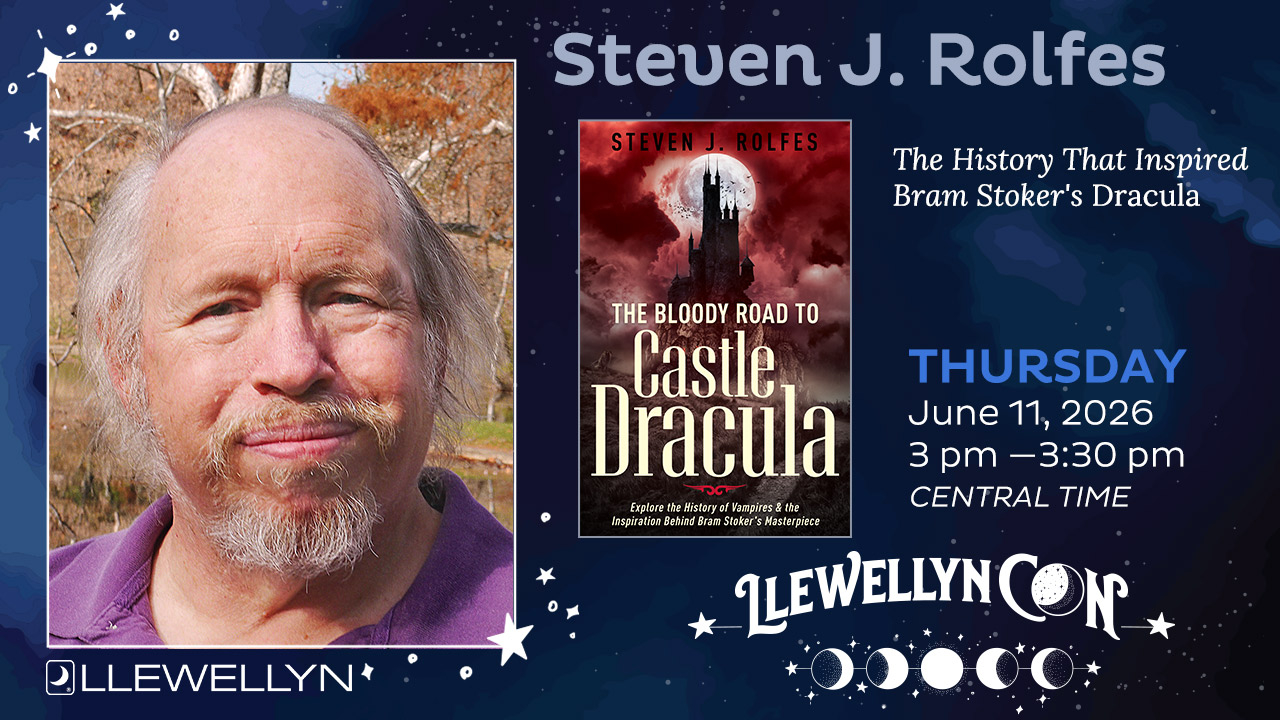
Steven J Rolfes is the author of numerous books, including The Bloody Road to Castle Dracula, Beware the Banshee's Cry, and Historic Downtown Cincinnati (with Kent Jones). Passionate about history, Rolfes has been ...